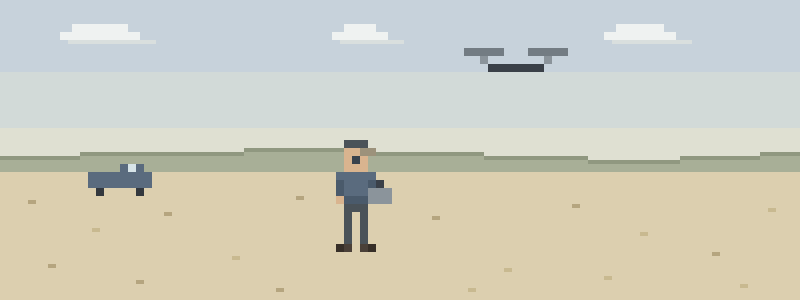
Solo-site emergencies
- Black rock, no shade. Four hours of flights off a mesa that runs fifteen degrees hotter than the forecast, and your spotter has stopped sweating and started rambling. Cool first, right there, with what’s in the truck.
- The landing zone has a resident. The aircraft is down in the cheatgrass and so is a rattlesnake, and now there are two punctures above your boot line. Sharpie, time, immobilize, drive — none of the movie stuff.
- The dot on the screen. A mapping pass over the canyon shows a dirt bike on its side and a rider who isn’t moving. You have a truck, a kit, coordinates, and a head start — what you do with them is this course.
Pre-flight your first aid
Checklist order, for people who like checklists:
- Provider Safety — solo fieldwork means the first patient is usually you
- Patient Assessment — for the day the job description quietly changes
- Heat Illness — launch sites are heat sinks and the schedule doesn’t care
- Bites & Stings — snakes like the same flat, sunny LZs you do
- Evacuation — you already have coordinates — learn what else the call needs

Then pressure-test it
Interactive scenarios — one decision at a time, tempting mistakes included, debrief at the end:
- Cool First — heat stroke, cooled where it happens
- Sharpie on the Leg — snakebite, minus the folklore
- Hero Complex — reading the scene before you become part of it
The certification question, honestly. “Wilderness First Aid” isn’t a regulated credential. No government body defines what a WFA card means — it means whatever the company that printed it says it means. What counts in front of a patient is whether you can do the work. This course teaches the work, free, and issues a record of completion — not a certificate, and we won’t pretend otherwise. Part 107 covers the airspace; it has nothing to say about the aftermath. If a client or employer requires a first aid card for remote crews, take that class and bill it to the project — this is how you show up ready. If nobody requires you to hold a card, what you need are the skills, not the laminate.
What this is
Fifteen lessons, a 40-question knowledge check, sixteen practice scenarios, a printable field reference card, and a kit checklist. Free, no account, nothing recorded about you, source on GitHub. It teaches decision-making, not hands-on skill — practice the hands-on parts on a real, padded, complaining friend.
Other throttle-and-altitude people: dual-sport & ADV riders · ATV & side-by-side riders · overlanders & 4x4 off-roaders