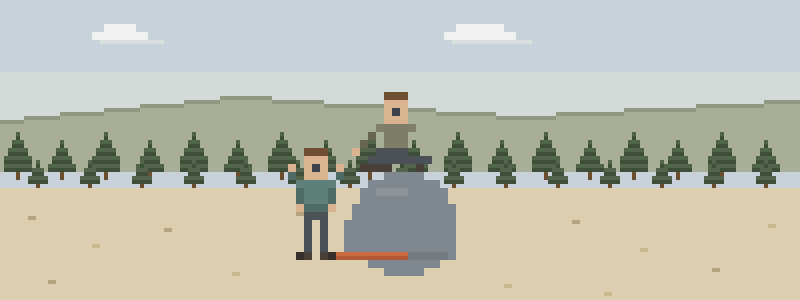
Between the pads
- Off the top, between the pads. The gap between two pads finds an ankle from twelve feet. Now it’s a splint, a CSM check, and a talus-field decision about hopping, carrying, or calling.
- Flat on his back, asking what happened. He greased off the lip and landed square across the pad edge. He’s moving everything and wants to sit up — with that mechanism and that back pain, your job is to slow the room down.
- The highball wins. She hits from high and doesn’t bounce up — she’s out cold, and there’s a snore in it. That sound is an airway problem, and it outranks everything else at the boulder.
Session reading, in order
Five short lessons, ordered by how ground falls actually land:
- Musculoskeletal Injuries — ankles and wrists, straight off the pad
- Spine Injuries — back-first landings earn conservative handling
- Airway & Breathing — the knocked-out landing, and the snore that isn’t sleep
- Patient Assessment — spotters saw the mechanism — turn that into an exam
- Evacuation — boulder fields sit close to the car and are terrible to cross

Then pressure-test it
Interactive scenarios — one decision at a time, tempting mistakes included, debrief at the end:
- Wiggle, Feel, Warm — splint it, then prove the fingers still work
- Snoring Isn’t Sleeping — the highball knockout, minute by minute
- Don’t Sit Him Up — everyone will want to sit him up — don’t
The certification question, honestly. “Wilderness First Aid” isn’t a regulated credential. No government body defines what a WFA card means — it means whatever the company that printed it says it means. What counts in front of a patient is whether you can do the work. This course teaches the work, free, and issues a record of completion — not a certificate, and we won’t pretend otherwise. Crag guides and instructors: the AMGA single pitch track and most employers expect a current WFA or WFR card alongside it, from a recognized provider — this record of completion isn’t that. It’s the free groundwork that makes the paid course stick. If nobody requires you to hold a card, what you need are the skills, not the laminate.
What this is
Fifteen lessons, a 40-question knowledge check, sixteen practice scenarios, a printable field reference card, and a kit checklist. Free, no account, nothing recorded about you, source on GitHub. It teaches decision-making, not hands-on skill — practice the hands-on parts on a real, padded, complaining friend.
Other people who rope up: via ferrata climbers & operators · backcountry skiers & splitboarders · mountaineers & high-altitude climbers