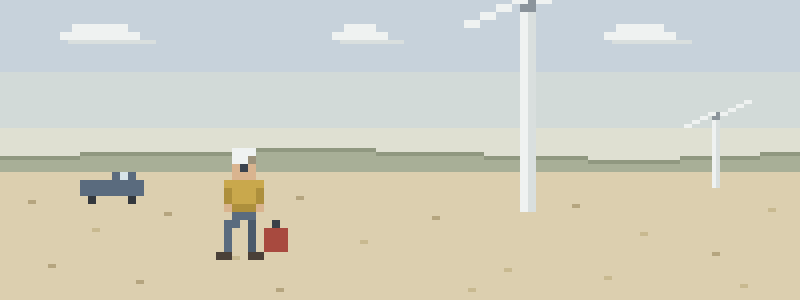
Between the rows
- String 14, no shade anywhere. Mid-July commissioning, and your coworker’s answers stop matching your questions. The array is a reflector oven — cooling starts between the rows, with the water on the truck.
- The ladder at the laydown yard. Twelve feet off the top of a conex onto hardpan, and he’s up laughing before you get there. Take vitals anyway, then again in fifteen — the trend is the truth.
- Calling 911 from a road with no name. Dispatch wants an address; you have a turbine number and eleven miles of gravel. What you stage before the season — pins, gate codes, a meet point — is measured in minutes saved.
Tailboard reading order
Five lessons, in site-priority order:
- Heat Illness — panel glare and turbine climbs — catch the spectrum early
- Musculoskeletal Injuries — ladder and vehicle injuries, splinted for a long ride out
- Patient Assessment — serial vitals on the coworker who bounced up fine
- Evacuation — the site-address problem, solved before you dial
- Kits & Preparation — a truck kit built for the site, not the glovebox

Then pressure-test it
Interactive scenarios — one decision at a time, tempting mistakes included, debrief at the end:
- Cool First — heat stroke between the rows
- The Guy Who’s Fine — the ladder fall that looked fine
- Two Go, One Stays — making one bar of signal count
The certification question, honestly. “Wilderness First Aid” isn’t a regulated credential. No government body defines what a WFA card means — it means whatever the company that printed it says it means. What counts in front of a patient is whether you can do the work. This course teaches the work, free, and issues a record of completion — not a certificate, and we won’t pretend otherwise. Your employer’s safety program — fall protection, LOTO, whatever first-aid card the contract requires — stands, and this replaces none of it. It’s the depth behind the card: fluency for the hour before the ambulance finds the gate. If nobody requires you to hold a card, what you need are the skills, not the laminate.
What this is
Fifteen lessons, a 40-question knowledge check, sixteen practice scenarios, a printable field reference card, and a kit checklist. Free, no account, nothing recorded about you, source on GitHub. It teaches decision-making, not hands-on skill — practice the hands-on parts on a real, padded, complaining friend.
Other far-from-help day jobs: outdoor & adventure photographers and documentary crews · field biologists, ecologists & environmental consultants · forestry workers, timber cruisers & arborists