Field-trip failure modes
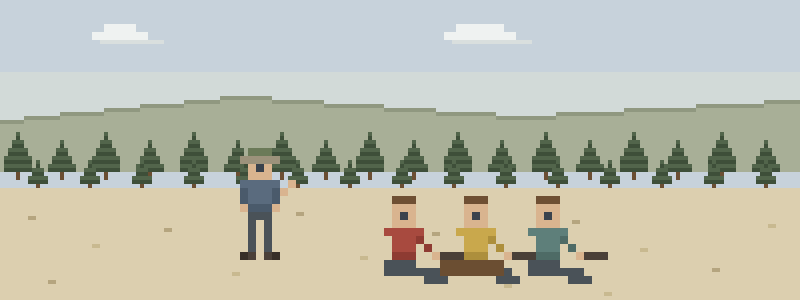
- The overlook. One student down with a bad ankle, fourteen more on a ledge losing interest. Treating the patient is half the job; keeping the group deliberately parked and led is the other half.
- Page two of the med form. Twenty minutes up the trail, the student who “forgot” her inhaler starts working to breathe. The roster isn’t paperwork — it’s your patient list in advance.
- The hand-off. EMS meets you at the trailhead and asks what happened. Two sets of vitals with times, written down, turn you from a bystander into the first link in the chain.
The staff-training five
In the order institutional trips need them:
- Provider Safety — scene control when the scene includes fourteen teenagers
- Patient Assessment — SAMPLE, serial vitals, and notes worth handing to EMS
- Medical Emergencies — diabetes, asthma, and whatever else the med forms mention
- Anaphylaxis — field trips carry every allergy in the school district
- Evacuation — messengers, notes, and never splitting a group thoughtlessly

Then pressure-test it
Interactive scenarios — one decision at a time, tempting mistakes included, debrief at the end:
- The Guy Who’s Fine — serial vitals — and the note-taking habit — catch it
- Hero Complex — scene safety with an audience in the fall line
- Two Go, One Stays — who goes, who stays, what the note says
The certification question, honestly. “Wilderness First Aid” isn’t a regulated credential. No government body defines what a WFA card means — it means whatever the company that printed it says it means. What counts in front of a patient is whether you can do the work. This course teaches the work, free, and issues a record of completion — not a certificate, and we won’t pretend otherwise. Most institutions specify the credential their field staff need — WFA or WFR from an approved provider, plus CPR — and that requirement is the floor, not a suggestion. Use this to arrive fluent, brief your chaperones, and stay sharp between renewals. If nobody requires you to hold a card, what you need are the skills, not the laminate.
What this is
Fifteen lessons, a 40-question knowledge check, sixteen practice scenarios, a printable field reference card, and a kit checklist. Free, no account, nothing recorded about you, source on GitHub. It teaches decision-making, not hands-on skill — practice the hands-on parts on a real, padded, complaining friend.
Others out there with a crowd of kids: forest school educators & early-childhood nature guides · dog walkers & off-leash trail group leaders · scout & youth outdoor leaders