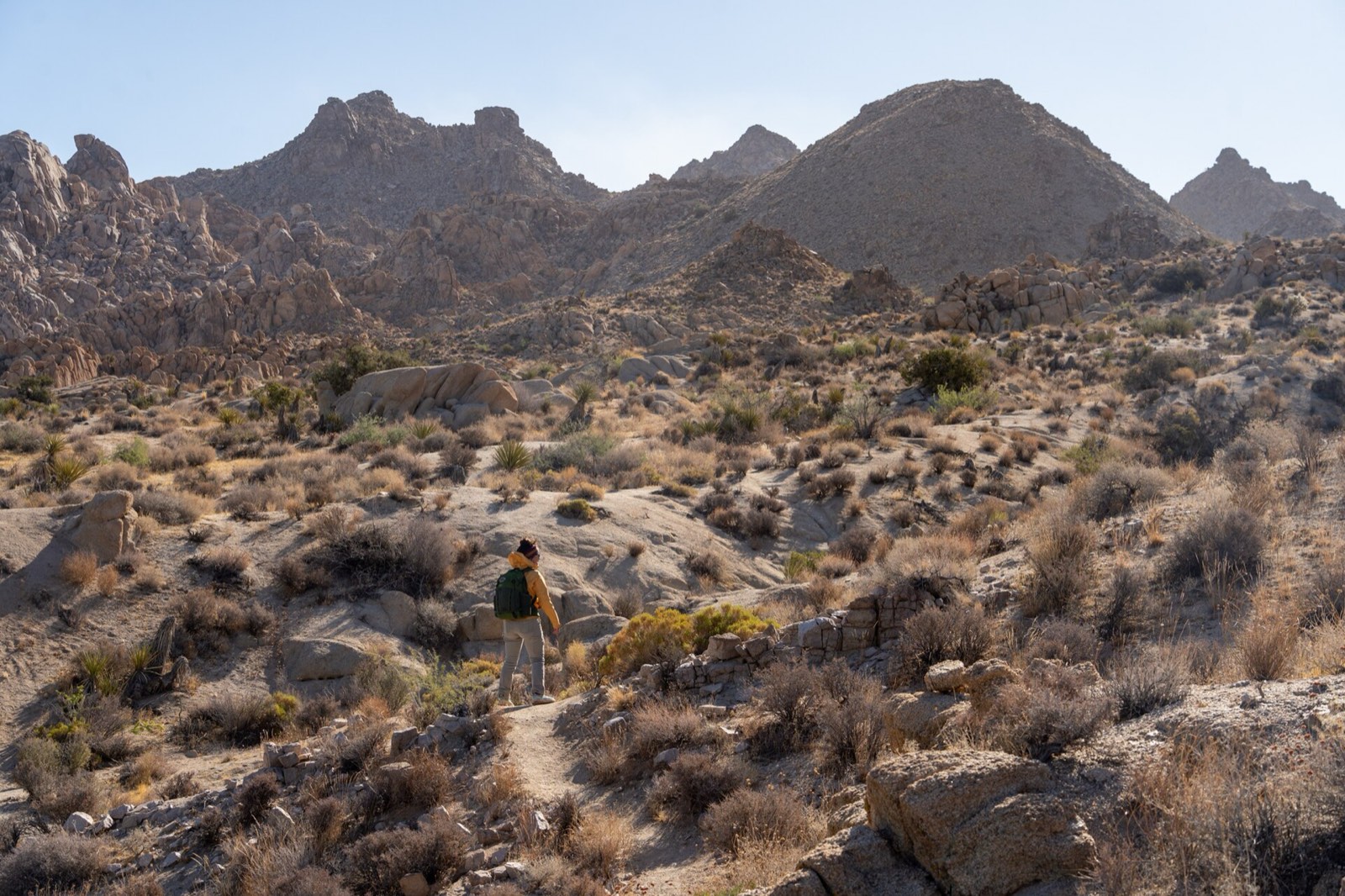
Your version of a bad day
- She stopped sweating an hour ago. Mile nine, no shade taller than a knee, and her answers stop matching your questions. Heat stroke gets cooled now, here, with the water you were rationing — not at the trailhead.
- Blue sky, brown roar. The storm is forty miles upstream and the slot narrows ahead. Reading the drainage — not the sky over your head — is the scene call that keeps one patient from becoming five.
- The truck is the casualty. A sheared valve stem two hours down a washboard road, one gallon left per person. Stay-or-walk is an evacuation problem, and the arithmetic is unforgiving in July.
Start here
All 15 lessons are worth your time, but this order front-loads what your world serves up:
- Heat Illness — the core curriculum out here — the spectrum, and cool-first when it tips
- Provider Safety — flash floods and rimrock: the reads you make before you approach anybody
- Bites & Stings — snake-country rules — mark the swelling, skip the folklore
- Evacuation — stay with the vehicle or walk out — do the water math before you decide
- Kits & Preparation — the vehicle kit, and water as first aid equipment
Then pressure-test it
Interactive scenarios — one decision at a time, tempting mistakes included, debrief at the end:
- Cool First — cool first, with the water you were saving
- Sharpie on the Leg — the snakebite, done by doctrine
- Two Go, One Stays — the messenger plan when driving out isn’t an option
The certification question, honestly. “Wilderness First Aid” isn’t a regulated credential. No government body defines what a WFA card means — it means whatever the company that printed it says it means. What counts in front of a patient is whether you can do the work. This course teaches the work, free, and issues a record of completion — not a certificate, and we won’t pretend otherwise. Slot-canyon rescue is rope work, and rope work belongs to a rope course — we don’t teach it. If an outfitter or guide program requires a provider’s card, take their class; you’ll arrive already fluent in the heat doctrine you’ll use most. If nobody requires you to hold a card, what you need are the skills, not the laminate.
What this is
Fifteen lessons, a 40-question knowledge check, sixteen practice scenarios, a printable field reference card, and a kit checklist. Free, no account, nothing recorded about you, source on GitHub. It teaches decision-making, not hands-on skill — practice the hands-on parts on a real, padded, complaining friend.